
Shizuku Apk: Android ADB & Wireless Debugging

Looking to install Shizuku Apk on your Android device? This guide will walk you through downloading the latest version of Shizuku APK and setting it up step-by-step.
Shizuku is a powerful tool that lets apps use advanced system APIs via ADB or wireless debugging without rooting your phone.
In other words, it can give apps root-like powers while keeping your device unrooted. In end of this guide, you’ll know how to get Shizuku, install it, and use its core features. Let’s dive in!
Download Shizuku APK Latest Version
You can download the official Shizuku APK from the Google Play Store, the F-Droid repository (IzzyOnDroid), or the official GitHub releases.
We recommend using the official sources. As of mid-2026, the latest Shizuku version is 13.6.0 (build r1091) released on July 3, 2025. This release added important updates like support for Android 16 QPR1 and automatic startup without root on Android 13+ when on trusted Wi-Fi.
Shizuku Android
Download Shizuku for Android direct my site .
Shizuku Github
Download shizuku from official github page.
Google Play
Download shizuku from google play store.
F-Droid Repository
Download shizuku from IzzyOnDroid F-Droid Repository.
What’s New in Version v13.6.0
- Android 16 QPR1 support: Shizuku now runs on the very latest Android preview (as of May 2023).
- Wireless debug auto-start: On Android 13+ with trusted Wi-Fi networks, Shizuku can auto-start without root.
- Improved startup command: You can copy the Shizuku start script (rish) to any executable folder (e.g. /data/local/tmp/shizuku) for easier use.
- Other fixes: Minor bugs were fixed for smoother operation. Refer to the full changelog on GitHub for details.
Shizuku APK – Quick Overview
Most Android users don’t need root, but sometimes you want more control like removing system apps, changing settings, or giving apps extra permissions. Shizuku bridges that gap. It runs a small “service” on your phone (started via ADB or root) that grants apps special rights they normally wouldn’t have.
I’ve personally used Shizuku to uninstall annoying preloaded apps on my device without fully rooting it. It felt surprisingly easy once I had it set up. In my experience, Shizuku is a safe, open-source project that thousands of users rely on. In this guide, I’ll share the exact steps I followed downloading the APK, enabling debugging, pairing devices, and troubleshooting any issues.
| App Name | Shizuku – Android ADB Privileged API |
| Latest Version | 13.6.0 (r1091) – Jul 3, 2025 |
| Developer | Qixingchen (Xingchen) & Rikka |
| Category | Tools / System Utilities |
| Required Android | Android 7.0+ (Nougat) |
| File Size | 2.5 MB |
| Updated On | Jul 3, 2025 |
| Downloads | 10M+ on Google Play |
| Pricing | Free (open-source) |
| Permissions | INTERNET, WRITE_SECURE_SETTINGS |
| Supported Devices | All Android phones/tablets (ARM & x86) |
What Is Shizuku Apk?
Shizuku is Android tool (by RikkaApps) that lets apps use system APIs and special permissions without rooting your phone.
In simple terms, Shizuku runs a background service under the Android ADB shell user, so apps can make high-level changes like toggling settings or managing app permissions as if they had root, but without actually modifying the system.
It works on Android 6.0+ devices. For non-rooted phones, Shizuku must be started via ADB or wireless debugging each time after a reboot. In short, Shizuku unlocks powerful features by bridging your apps to the Android Debug Bridge (ADB) interface.
It’s open-source, has a simple interface, and works on stock devices with either root or ADB/wireless debugging.
Key Features of Shizuku Apk
System API Access Without Root
Shizuku lets apps call privileged APIs through an ADB shell. For example, apps can read or write system settings, modify app components, and more. Essentially, apps use Shizuku as a middleman so they don’t need root. This service broker model means apps talk to Android’s services via Shizuku rather than directly with root.
Wireless ADB Debugging
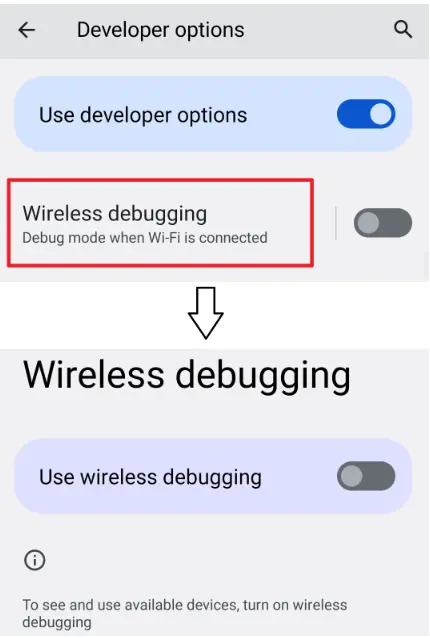
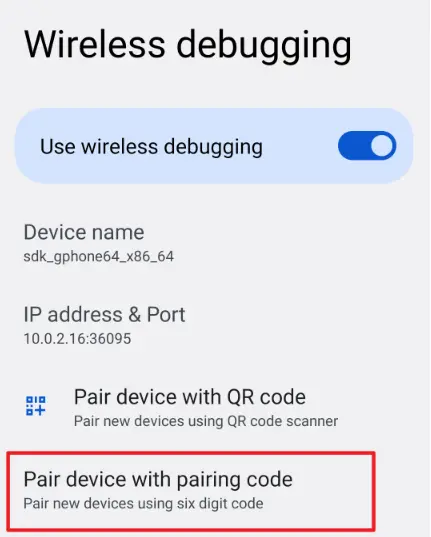
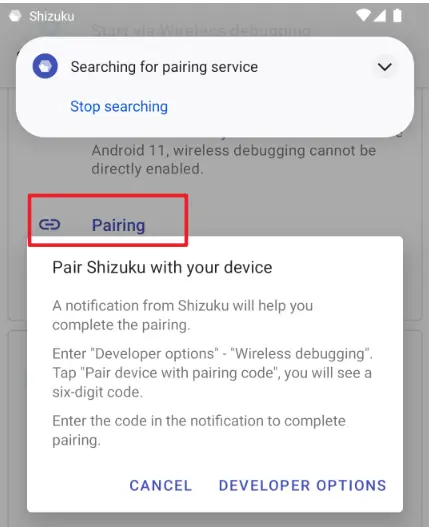
Starting with Android 11, you can enable Wireless Debugging on the device. Shizuku integrates with this feature. In the app’s interface, tap Start with wireless debugging. Your phone will search for a code. Meanwhile, on the phone go to Developer Options → Wireless debugging and tap Pair device with pairing code. Shizuku will then enter the six-digit code shown. Once paired over Wi-Fi, Shizuku runs its server and no USB cable or PC is needed. This allows fully wireless setup of Shizuku on Android 11 and above.
Rooted Device Support
If your device is rooted, Shizuku offers a super-simple mode, just open the app and tap Start with root. Shizuku will use root privileges to start its service. This is the easiest method – no pairing or ADB needed. Many users with Magisk or other root simply enable Shizuku in startup and forget about it.
Termux & Local ADB Shell
Advanced users can even run Shizuku commands from a terminal on the device. For example, in Termux or any local shell with ADB tools, you can use the rish binary that comes with Shizuku to start or stop the service. Termux users should run termux-setup-storage first and then move the rish file into $PREFIX/bin. This way, you can manage Shizuku like a normal service via command line.
Compatibility with Popular Apps
Shizuku unlocks extra features in apps that know how to use it. Notable examples include manga apps (Aniyomi, Mihon), file managers (MT Manager, Solid Explorer), and uninstallers.
Open Source and Transparent
Shizuku is developed by the same team behind the App Ops permission manager. Its source code is public on GitHub. This means security-minded users can verify exactly what it does. The app is also free and ad-free, with no hidden trackers. The APK signature has been checked by VirusTotal and found clean, so you can trust that it does what it claims.
Continual Updates and Community Support
Shizuku has been actively developed for years. Each update brings support for newer Android versions. There’s also a helpful community on Reddit and GitHub issues. If you run into issues, chances are someone else has asked the same question. Plus, the app includes a tutorial to walk you through the setup steps. All of this makes Shizuku a reliable, evolving project backed by an expert developer.
Shizuku Apk Installation Requirements
Android Version
App supports Android 7.0 (Nougat) and above.
Storage space
You need about 2.5 MB to install the APK
Wi-Fi network
For wireless mode, both phone and PC.
Developer Options
Enable Developer Options on your phone.
Shizuku App Download & Installation Guide (Step-by-Step)
Step 1: Download Shizuku Apk
Download the latest Shizuku APK from the official site or GitHub releases. It may also be on Google Play for non-root use.
Step 2: Install Shizuku app
Enable Install unknown apps if you sideload the APK. Tap the downloaded file and follow the prompts. Shizuku doesn’t need any special runtime permission besides USB or wireless debugging later.
Step 3: Open Shizuku
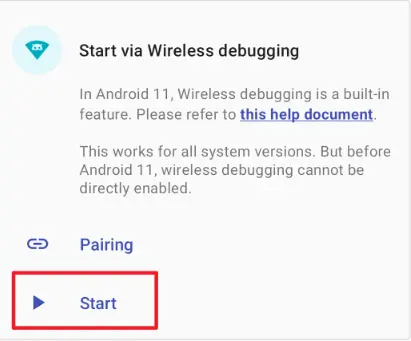
The first time, you’ll see options like Start via ADB and Start via Wireless Debugging. No other setup is needed. It works for both rooted and non-rooted devices.
How to Use Shizuku on Android: Using Root, Wireless, or ADB
Shizuku can be launched in three ways, depending on your device:
Method 1: Root method
If your device is rooted, simply grant Shizuku root permissions. Open Shizuku and tap Start with root. It will run under the root user (UID 0) and stay active even after reboots if properly set up (e.g. via the Sui Magisk module). No ADB or PC is needed in this mode.
Wireless Debugging (Android 11+)
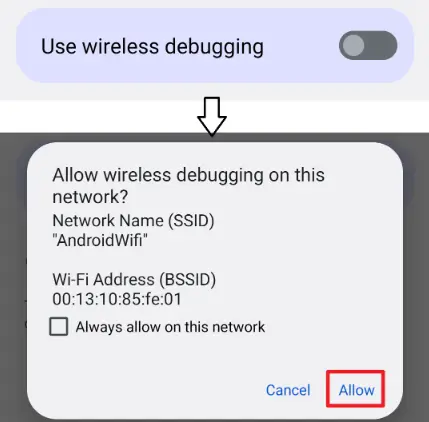
For non-rooted Android 11 or newer devices, use wireless debugging over Wi-Fi. Enable “Wireless debugging” in Developer Options and pair your device with Shizuku (steps below). Then open Shizuku and tap Start. This runs the service on-device using the built-in ADB-over-WiFi feature.
ADB (computer) method
For older Android or if you prefer USB, use a PC with ADB. First enable USB debugging, connect your phone via USB, then run a single command on your computer:
adb shell sh /sdcard/Android/data/moe.shizuku.privileged.api/start.shAfter running this command, open Shizuku and tap Start to begin the service. If the command succeeds, Shizuku should show as running. This method requires repeating after each reboot on non-root devices.
Enable USB Debugging for Shizuku Setup (Android 10/11/12/13)
To use ADB (USB) with Shizuku, you must enable USB debugging on your Android device:
1. Activate Developer Options
Go to Settings > About phone and tap version number 7 times until “You are now a developer” appears.
2. Find USB Debugging
Go back to Settings > System > Developer options or search developer in your settings.
3. Toggle it on
Turn on USB debugging. You may see a warning; accept it. On some phones (e.g. Xiaomi/POCO), there may be two toggles: “USB debugging” and “USB debugging. Enable both if present.
4. Authorize your PC
Connect your phone to the computer. When the Allow USB debugging? prompt appears, check Always allow and tap OK. Now your phone is authorized for ADB.
These steps are essentially the same on Android 10 through 13. Once USB debugging is enabled, you can use the adb commands from your PC (or Termux) to start Shizuku or interact with the device.

Wireless Debugging Setup for Shizuku: Pair Your Android Device
To start Shizuku without a PC on Android 11 or higher, pair your phone via Wireless Debugging and Shizuku:
Enable Developer Options and USB Debugging
Go to Settings > About phone, tap version number seven times until you see You are a developer mode. Then open Settings > Developer options and turn on USB debugging. This allows ADB connections between your phone and apps like Shizuku.
Turn on Wireless Debugging
Still in Developer options, find Wireless debugging and toggle it on. Wireless debugging opens a “pairing” mode that Shizuku can use.
Start pairing in Shizuku
Open the Shizuku app and tap Start (it may say “Start via Wireless Debugging”). Shizuku will generate a 6-digit pairing code.
Pair the device
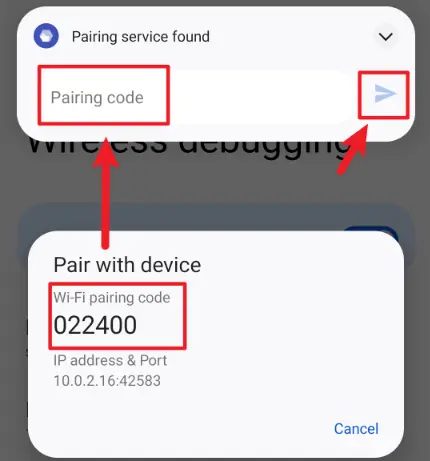
Shizuku is waiting, go back to Settings > Developer options > Wireless debugging and tap Pair device with pairing code. A system dialog appears asking for the code.
Enter the pairing code
When prompted, type the 6-digit code from Shizuku into the system pairing dialog and confirm. You may see a confirmation that the device is paired successfully.
Start Shizuku
Return to the Shizuku app and press Start (if not auto-started). Shizuku should now be running on your phone via wireless ADB. If it fails, try toggling wireless debugging off/on or rebooting the phone.
Each step above is usually needed only once, but note: Shizuku must be restarted after each reboot on non-rooted phones.
Shizuku ADB Commands: Top Examples & Usage Tips
Once Shizuku is running, you can use ADB shell or helper tools to do advanced tasks:
Start/stop Shizuku
As shown above, adb shell sh /sdcard/Android/data/moe.shizuku.privileged.api/start.sh launches Shizuku. You can stop it by closing the app or rebooting.
Run shell commands
With Shizuku active, any shell command you run via ADB will have the shell-level privileges. For example, adb shell pm list packages or adb shell dumpsys deviceidle now execute under the privileged “shell” user.
Using shizukuCLI
Some community tools let you run Shizuku commands on the device. For example, the termux-shizuku-tools provides a shizuku command. It supports actions like shizuku info (check status), shizuku shell (open a Shizuku-enabled shell), and shizuku exec <command> (run a shell command).
Rish shell
The Shizuku project also offers a helper shell called rish. (E.g. rish -c ‘reboot’ will reboot via Shizuku shell.) Some apps and scripts use rish for complex tasks.
Permissions
Remember, Shizuku does not grant your apps any new Android permissions; it simply uses the system’s own ADB shell identity to perform tasks. Always run commands with care and from a trusted source.
Using Shizuku in Termux: Running ADB Shell Commands on Android
You can use Termux together with Shizuku to run commands locally on the phone:
Step 1: Install termux-shizuku-tools
A popular open-source package is termux-shizuku-tools. It adds a shizuku command in Termux. Install it by downloading the latest .deb from its GitHub releases and running dpkg -i termux-shizuku-tools*.deb.
Step 2: Check status
In Termux, run shizuku info to see if Shizuku is running (it should say “Running” when the service is active.
Step 3: Execute commands
You can do things like shizuku shell to get an interactive shell as the ADB user, or shizuku exec “pm list packages” to execute a command.
For example, shizuku exec “ls /sdcard” will list files via the ADB shell. These tools call Shizuku’s APIs under the hood.
Step 4: Open Shizuku UI
shizuku open (or shizuku o) in Termux will launch the Shizuku app GUI, handy if you need to tap “Start” after running the ADB command.
Step 4: Stop Shizuku
shizuku stop (or shizuku s) will shut down the Shizuku service.
In summary, with Termux and Shizuku running on the phone, you can perform many device management tasks locally without a PC, as if you had a root shell.
Is Shizuku Apk Safe? Security & Privacy on Android
Shizuku is generally safe when used properly. It is an open-source tool by Rikka developer, and it requires your explicit action to start.
Always use the official Shizuku releases from GitHub or the Play Store. These builds are verified and have a high security rating.
Shizuku itself does not inject ads or malware. It doesn’t need root or special permissions beyond what you grant via ADB/wireless debugging. In fact, Shizuku runs under the normal “shell” user, so it can’t do anything that you couldn’t do with ADB yourself.
Shizuku does not collect personal data or require Internet access. It only forwards requests from apps to the Android system. The BeVigil report shows no malicious trackers or dangerous permissions.
You must explicitly start Shizuku each time and apps must ask you for permission via the ADB shell signature each time on boot. You can always stop Shizuku from its app UI. If you doubt an app’s usage of Shizuku, don’t start it.
Shizuku is a developer tool. Do not use it to violate app or system terms. Use it for legitimate customization or convenience only.
In summary, Shizuku itself is as safe as using Android’s own ADB. It doesn’t “root” your device or permanently change anything. For maximum safety, download from official sources and keep your device secure.
Best Shizuku Apps 2026: Top Android Tools Using Shizuku
Here are some top Shizuku-enabled apps (as of 2026) that you might find useful:
MacroDroid
A powerful automation tool. Recent versions include Shizuku support for extra privileged actions toggling developer settings, etc.
Tasker Settings
A helper app that lets Tasker perform system actions using Shizuku.
LADB (Local ADB Shell)
Runs a full ADB shell on the device and shows output on-screen. It requires Shizuku to gain the shell user privileges.
VolumeManager
Manage app volumes individually without root. It uses Shizuku to get the necessary permissions.
UbikiTouch
Provides custom edge-swipe gestures and menus. It relies on Shizuku (or root) to perform actions when you swipe.
PhoneProfilesPlus
Automatically configures your device for different scenarios. It can use Shizuku to change settings in the background.
AppOpsX
An advanced AppOps permission manager that uses Shizuku to toggle app permissions that normally require root.
Font tools
Allows changing system fonts on devices like Xiaomi; Shizuku is used for installing fonts.
Shizuku tools (CLI)
Apps like Termux-Shizuku-Tools or ShizuTools provide command-line or GUI interfaces to Shizuku features.
As Shizuku grows in popularity, new apps may add support. Always get these from official sources and verify compatibility.
Pros & Cons
Pros
- Root-like control without root: Access system APIs, uninstall bloatware, change settings.
- Wireless option: Newer Android can use it fully over Wi-Fi (no cable needed).
- Open source & free: No ads, no data collection, widely audited.
- Lightweight: Small APK 2.5 MB with minimal overhead.
- Active development: Regular updates add support for new Android versions and fix bugs.
- Multi-mode startup: Can use root, ADB, or wireless methods as needed.
Cons
- Some phones aggressively kill background apps, causing Shizuku to stop.
- Not very user-friendly. The interface is simple but understanding what to do can be tricky.
- It enables root-like actions for supported apps, but it’s not a substitute for root if you need something very specific.
- Only apps coded to use Shizuku will benefit. It doesn’t automatically give all apps new abilities.
User Reviews
Reviews from Google Play store users. They show a mix of praise for usability and real bug reports, giving an honest sense of how the app performs in everyday use.
Manoj Kumar
If you are confused, this gives you a lot of access and abilities that normally you would have to be rooted to get without having to root your phone. There’s a slight learning curve… but if you are okay watching a simple video you will be able to do amazing things.
Jason R.
Good app. Imagine if we had this in the old days… deleting system bloatware is easy. I never knew uninstalling the Google App on my phone would be the best decision I ever made. Thank you. I’ll buy you a coffee, mate. Cheers
Stan Smith
App does NOTHING. I did the whole ‘wireless debugging’ thing and… it just keeps cycling back to ‘searching for wireless debugging services’. This is clearly malware… DO NOT DOWNLOAD THIS APP!!!
Conclusion
Shizuku is a powerful tool app for Android. It bridges the gap between non-root and root by using ADB and wireless debugging to grant apps elevated permissions. If you want to uninstall system apps, tweak advanced settings, or use permission managers on a stock device, Shizuku makes it possible.
Shizuku is safe and effective for advanced Android use. It’s like having a superuser shell available to your apps without flashing any system images. Use it responsibly, and your Android experience can be much more flexible.
Shizuku FAQs
Which Android versions support Shizuku?
Shizuku requires Android 6.0 or higher. The wireless debugging method specifically needs Android 11 or above.
Will Shizuku run after a reboot?
On rooted phones, Shizuku can run on boot. On non-rooted phones, you must manually restart Shizuku after each reboot via ADB or wireless debugging.
Is Shizuku safe for my phone?
Yes, official Shizuku builds are safe and highly rated. It runs under your approval (ADB shell user) and does not bypass Android’s security. Just be careful to use official sources.